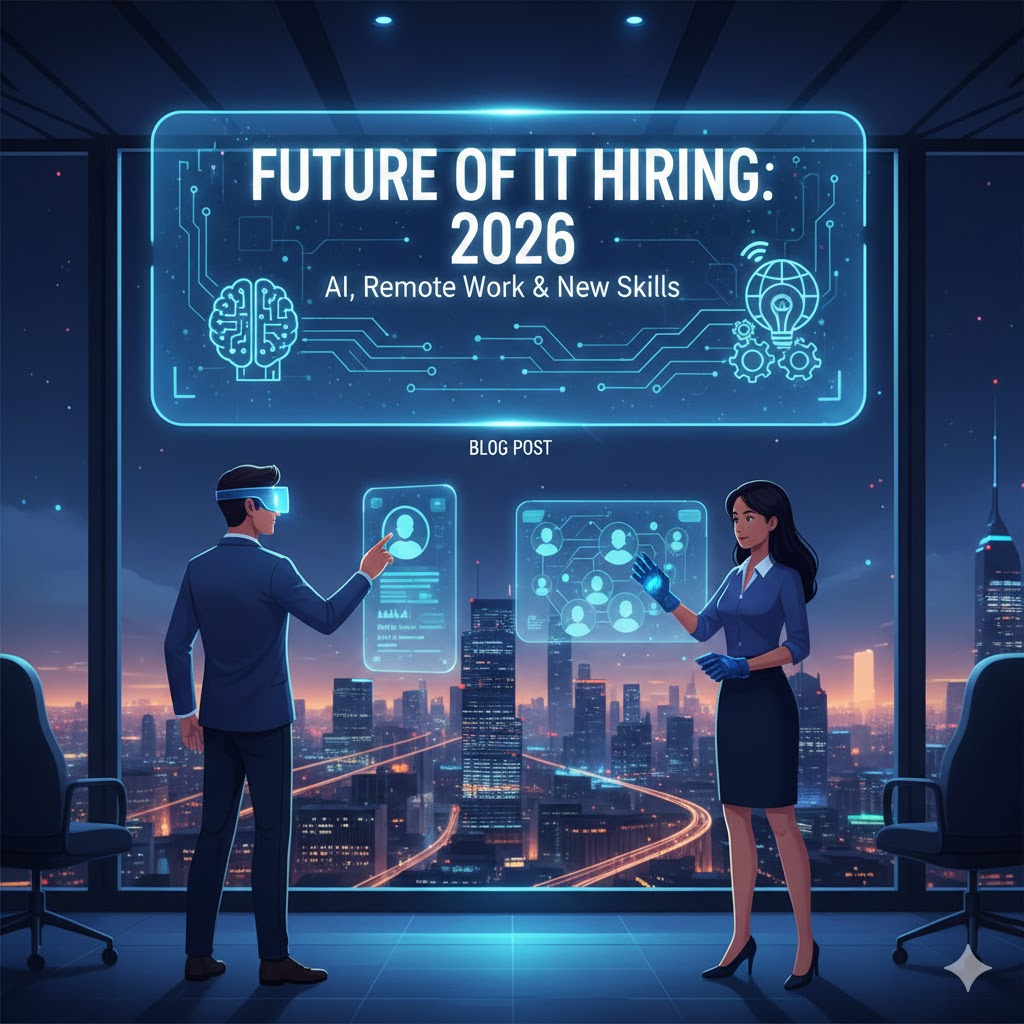
Future of IT Hiring 2026: AI, Remote Work & New Skills
The world of IT is in a constant state of flux, and with it, the strategies for attracting and retaining top talent are evolving at an unprecedented pace. As we look towards 2026, several key trends will define the future of IT hiring, challenging traditional approaches and demanding new levels of adaptability from both employers and candidates.
1. The Rise of AI in Recruitment:Artificial intelligence is no longer a futuristic concept; it's a present-day reality profoundly impacting recruitment. By 2026, AI-powered tools will be even more sophisticated, streamlining everything from initial candidate screening and resume analysis to predicting job performance and identifying skill gaps. Recruiters will leverage AI to sift through vast pools of data, personalize candidate experiences, and reduce unconscious bias in the early stages of the hiring process. This shift will free up HR professionals to focus on strategic initiatives, relationship building, and high-value decision-making.
2. Remote Work as a Permanent Fixture:The global events of recent years have solidified remote and hybrid work models as integral parts of the IT landscape. By 2026, companies that offer flexible work arrangements will have a significant competitive edge in attracting talent. This doesn't just mean working from home; it opens up a global talent pool, allowing companies to recruit the best and brightest regardless of geographical location. However, it also necessitates a focus on robust remote onboarding, effective virtual collaboration tools, and fostering a strong company culture across distributed teams.
3. The Premium on New and Evolving Skills:The rapid advancement of technology means that the most sought-after skills are continuously changing. While foundational IT skills remain crucial, 2026 will see an even greater emphasis on emerging areas such as:* Advanced AI/ML Expertise: Beyond simply using AI tools, the ability to develop, implement, and manage complex AI and machine learning solutions will be paramount.* Cybersecurity & Data Privacy: With increasing threats, specialists in advanced cybersecurity, threat intelligence, and privacy compliance will be in exceptionally high demand.* Cloud Native Development & DevOps: Expertise in cloud platforms (AWS, Azure, GCP), containerization (Docker, Kubernetes), and continuous integration/continuous deployment (CI/CD) pipelines will be standard requirements.* Low-Code/No-Code Platforms: While traditional coding remains vital, proficiency in leveraging low-code/no-code platforms for rapid application development will become a valuable asset.* Soft Skills for the Digital Age: Communication, collaboration, problem-solving, adaptability, and emotional intelligence will be more critical than ever, especially in remote and diverse team environments.
4. Data-Driven Decision Making:HR and recruitment will become increasingly data-driven. By 2026, organizations will use advanced analytics to understand hiring patterns, predict attrition, optimize talent acquisition channels, and measure the ROI of recruitment strategies. This move towards data-informed decisions will lead to more efficient, equitable, and effective hiring outcomes.
5. Emphasis on Employee Experience and Upskilling:In a competitive market, retaining talent is as important as acquiring it. Companies will invest heavily in creating exceptional employee experiences, focusing on career development, continuous learning, and fostering an inclusive work environment. Upskilling and reskilling initiatives will become strategic imperatives, ensuring that the existing workforce remains relevant and engaged with evolving technological demands.